
Finding Residents Across Gainesville
Match the record to what you already know. Hall County qPublic links an address or parcel to an assessed owner. The clerk's real-estate index ties a person's name to deeds, liens, and other recorded instruments. A court name can lead to a case number through the Hall docket gateway. Georgia's My Voter Page serves a voter checking their own registration, districts, and polling place. It also provides a sample ballot. Older names belong in the library's digitized city directories and archive collections.
No single roll lists every Gainesville household. The tax roll mainly names owners, not everyone living in a home. A deed proves a recorded sale, not present occupancy. Voter files skip the unregistered. Protected addresses may be withheld too. Treat each hit as a lead. Compare at least two details before calling it the correct Gainesville resident.
- Check whether the address falls within Gainesville or elsewhere in Hall County using the county GIS.
- Search qPublic for the parcel and assessed owner, then note the parcel number and property address.
- Use the owner's name in the GSCCCA deed index and record the instrument, book, and page references.
- For a historical search, match the address or surname in Gainesville city directories and census schedules.
- When a known public record is not online, send a focused request to its actual custodian.
Gainesville Resident Record Keepers
Gainesville is Hall County's seat. Several of the most useful resident records sit at the county level. The Clerk of Superior Court records real-estate instruments and keeps Superior and State Court files. The Board of Assessors maintains parcel and assessment data. Hall County Elections handles local registration. The Georgia Secretary of State, meanwhile, runs voter self-service and sells prescribed voter-list products. City Hall keeps Gainesville permits, code files, business-tax records, maps, and municipal administrative records.
Ownership questions go to the assessor and clerk. A city permit belongs with Gainesville. A court filing goes to the clerk or Magistrate Court, not a general open-records queue. The full address chain appears in the Gainesville street directory.
Hall Board of Assessors
2875 Browns Bridge Road
Gainesville, GA 30504
770-531-6720
Hall County Elections
2875 Browns Bridge Road
Gainesville, GA 30504
770-531-6945
Gainesville Parcels and Owners
Hall County describes qPublic as its parcel, assessment, and sales search, updated weekly. A parcel is one mapped unit of land. Its situs address marks the physical property. The mailing address shows where the tax notice goes. Those two addresses may differ. A mismatch can hint at an owner living elsewhere. Still, it says nothing about who rents or stays on the land. Open the official Hall County qPublic search for its current search modes and any historical cutoffs.
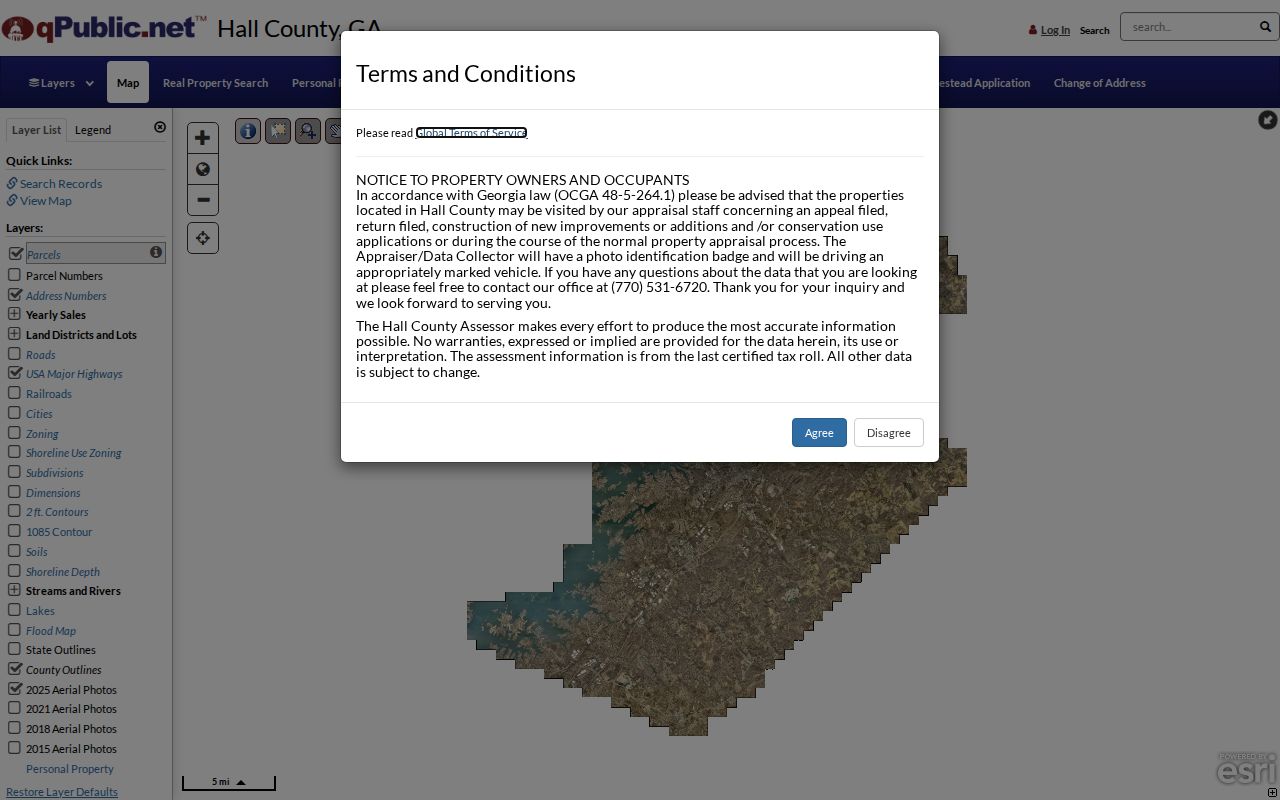
The search screen proves nothing alone. Save the parcel number, owner, situs address, mailing address, sale data, and legal description from the current record. Then check them against the GIS boundary and the recorded deed. Hall County says ownership corrections start in the Deed Room. That keeps the recorder the stronger source for the legal chain of title.
- Parcel
- A mapped tract used for assessment and land records.
- Situs address
- The physical address assigned to the property.
- Legal description
- The land description in the deed, often tied to a plat, lot, or boundary.
- Assessed owner
- The person or entity carried on the tax roll, which may not be every current occupant.
Gainesville Deeds Name the Parties
The Hall County Clerk's Real Estate Division and the GSCCCA search carry the recorded-property trail. Search by grantor or grantee. A grantor gives the interest. A grantee takes it. Deeds, liens, plats, and related instruments may tie a person to a Gainesville address at a point in time, and index entries should lead to a document image or a book and page reference. The GSCCCA Real Estate Search can be scoped to Hall County. It runs the statewide grantor and grantee gateway. None of it proves a party lived on the land.
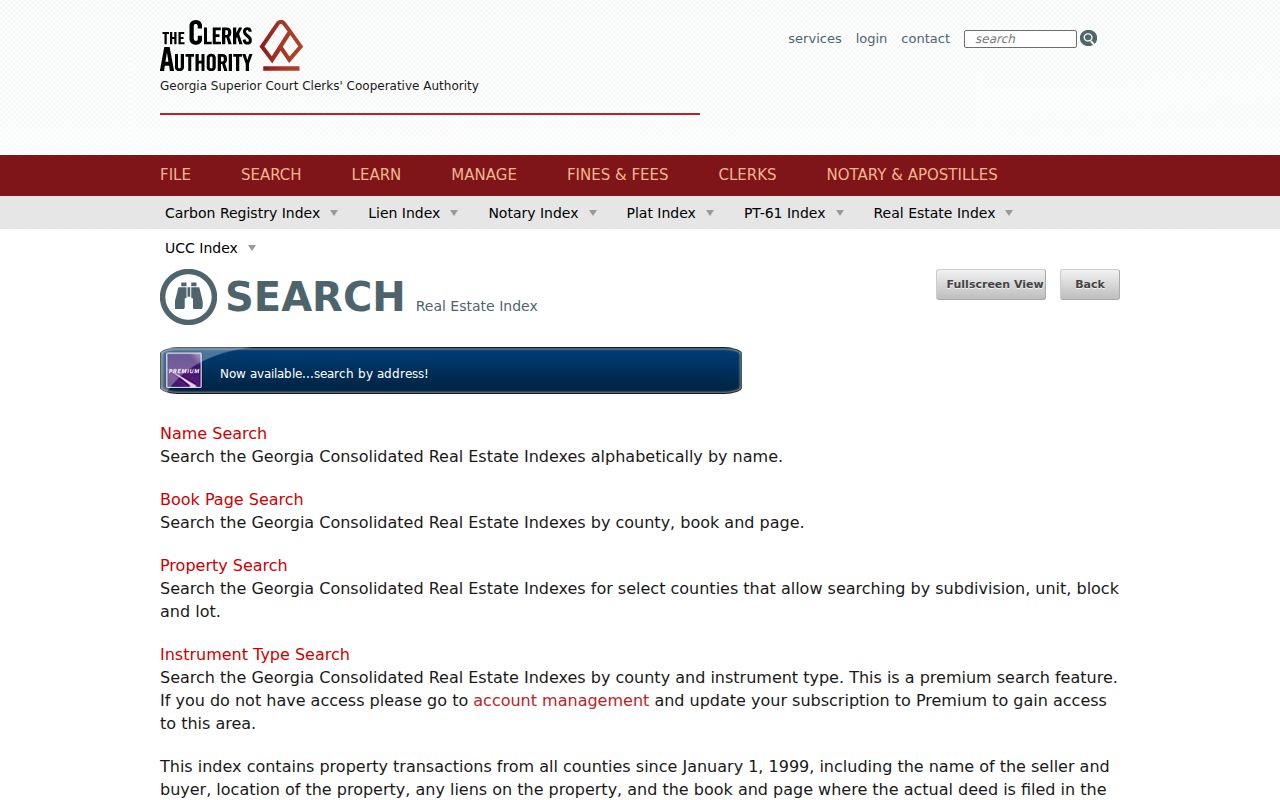
Try surname variants and a sensible date range. Then compare instrument type, recording date, legal description, and book or page. Hall's clerk takes counter and mail requests. Copies run $0.50 per page at the counter, or $1 per page by mail when the book and page are supplied. FamilySearch filmed Hall deed books from 1801 through 1901. Its general indexes reach 1920, opening older Gainesville research past the modern portal.
Current Gainesville Directory Sources
Think of the Gainesville residents directory as a set of official indexes with different scopes. Each proves something narrow. A court docket shows a name in a case. A business filing ties a person to a registered entity. None works as a full household list.
| Local source | Names covered | Record keeper | Best use |
|---|---|---|---|
| qPublic assessment roll | Assessed owners | Hall County Board of Assessors | Connect an owner to a parcel |
| GSCCCA real-estate index | Grantors and grantees | Hall County Clerk and GSCCCA | Trace recorded land transactions |
| Hall Online Docket | Parties in public cases | Superior, State, and Magistrate courts | Find a case number and court |
| Georgia business search | Agents and officers where filed | Secretary of State | Verify an entity connection |
| Chamber member directory | Member businesses and contacts | Greater Hall Chamber | Locate a public business contact |
Start narrow with one person. Log exact names, dates, parcel numbers, and case numbers as you go. The Gainesville resident lookup shows how to compare identifiers without merging same-name people.
Gainesville Voter Records Have Limits
Georgia's My Voter Page works as a self-check, not a Gainesville people finder. You enter a first initial, last name, county, and date of birth. The service shows your own registration status in return. It also lists districts, polling place, sample ballot, and absentee options. The Secretary of State sells voter datasets only as fixed products. Custom lists of Gainesville voters are off the table. A resident lookup can reach anyone at an address. Voter rolls in Gainesville stop short of that.
Visit the official Georgia My Voter Page to see the verification form itself. The state service page displays exactly which starting details it requires before any result appears.
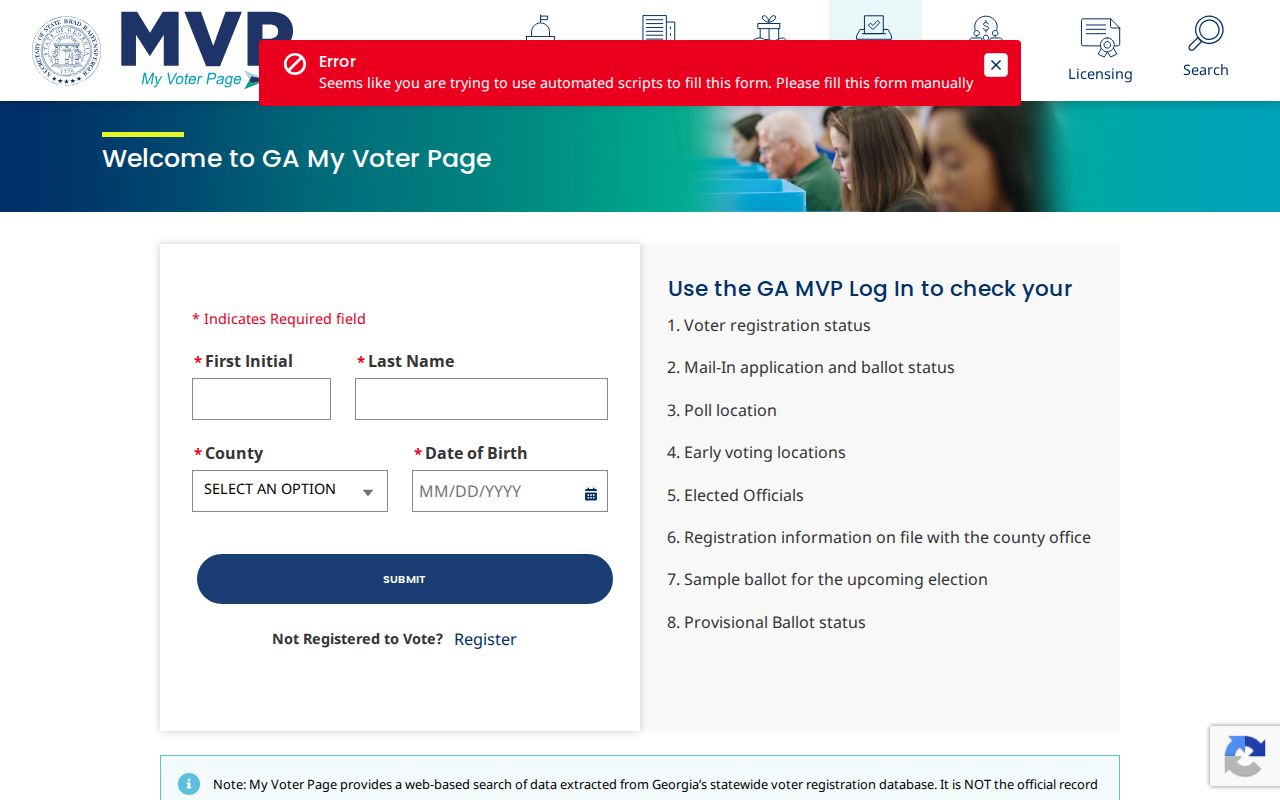
A match there verifies your own election details and nothing more. Treat it as personal confirmation. It is not proof of who lives at an address. Georgia Safe at Home adds another layer, giving eligible participants a substitute address and mail forwarding. Eligible participants also receive confidential voter registration when publicity would endanger them. That protection is a legal boundary every Gainesville resident lookup must respect. It is not a gap to work around.
Gainesville Court Names Need Context
Court records in Hall County split across several doors. The Hall Online Docket gateway covers Superior and State Courts. Magistrate Court sits outside its reach. Superior Court takes felonies, divorce, equity, and real-property disputes. State Court handles misdemeanors, traffic, and civil claims under state law. Magistrate Court covers smaller civil claims, dispossessory cases, and warrants within its jurisdiction. Gainesville Municipal Court hears city ordinance and traffic matters. Its city service offers citation payment rather than a party-name docket search.
A docket is the court's running case record. Results may surface a case number, parties, filings, or status. Always compare the case number and pull the file at the clerk before concluding anything. Some cases and fields stay sealed or redacted. A shared name alone never proves the Gainesville resident you want is the party in that case.
The Hall Clerk sits at 225 Green Street SE. Public counter hours are 8:00 a.m. to 5:00 p.m. on business days. Certified court or real-estate documents go through Georgia's eCertification service. Federal cases involving Gainesville use PACER. PACER needs registration and charges $0.10 per page, generally capped at $3 per document, with quarterly charges of $30 or less waived.
Vital Records Are Restricted
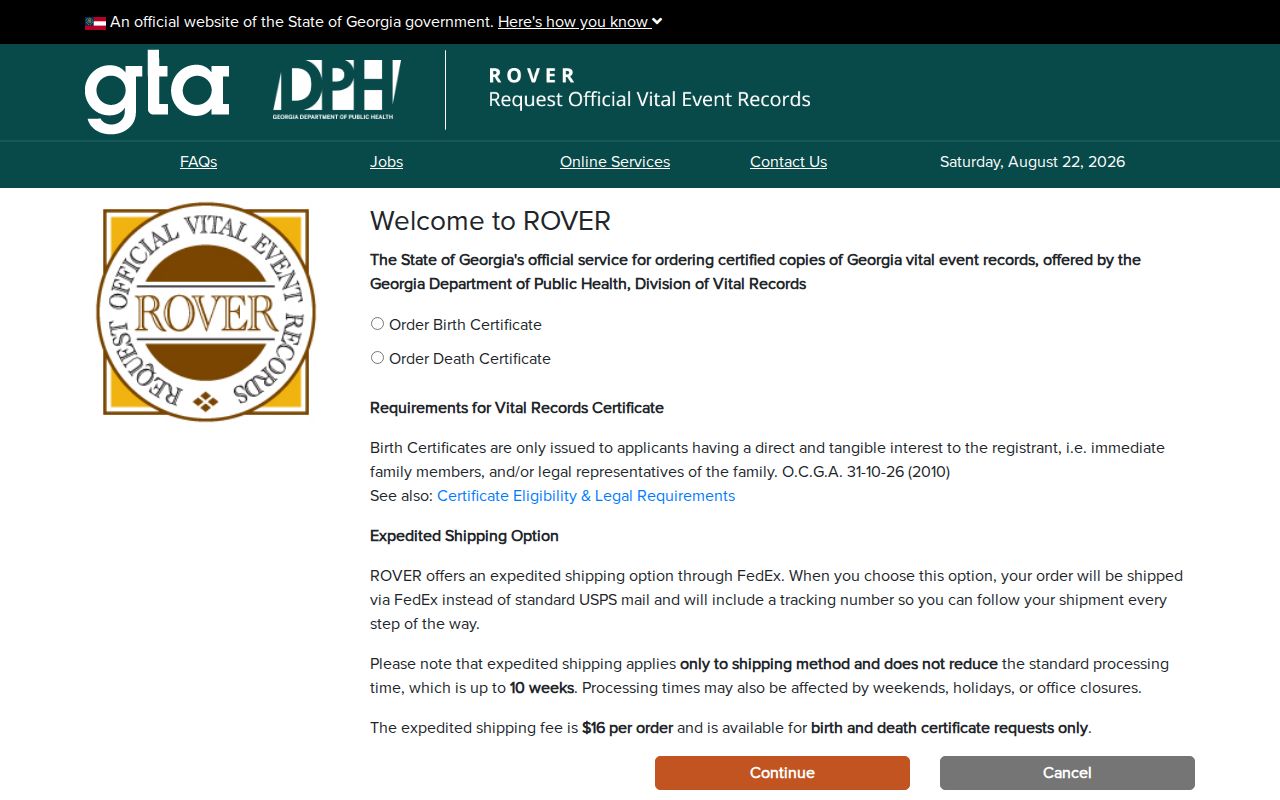
Birth and death certificates live with Hall County Vital Records and Georgia DPH. A modern birth certificate is not an open directory record, though. Georgia demands a direct and tangible interest under O.C.G.A. § 31-10-26. Qualifying applicants must show identification and, where applicable, proof of relationship. Statewide birth and death coverage starts in January 1919. That start date matters for tracing past residents of Gainesville through family lines.
Fees are set by DPH. The first certified copy costs $25. Each added copy in one order is $5. The online ROVER service adds an $8 processing fee. Mail orders run 8 to 10 weeks, ordinary online orders 2 to 4 weeks, some expedited orders up to five business days, and walk-ins get same-day service. A paid FedEx option speeds shipping only, never processing.
Use the official ROVER portal for its current birth and death order options. The landing page lays out both routes and repeats the direct-interest requirement.
Marriage and divorce papers follow different custody lines. Hall Probate Court holds the marriage licenses. DPH keeps marriage applications and certificates from June 1952 through August 1996, and offers marriage verification from January 1, 2014 forward. A divorce decree sits with the Superior Court that granted it. DPH can only confirm divorces from the 1952 to 1996 window.
Requesting Gainesville Public Records
Georgia's Open Records Act, O.C.G.A. §§ 50-18-70 through 50-18-77, sets a three business day window for a response. A response is not the same as delivery, though. When production runs long, the office may send a cost and completion estimate. The first 15 minutes of administrative time are free. Time beyond that is billed at the hourly rate of the lowest-paid qualified employee, and letter or legal copies cost $0.10 per page.
Gainesville accepts requests through JustFOIA and assigns a records specialist in the City Manager's Office at 300 Henry Ward Way, Suite 303. Email delivery is preferred where possible. Certification runs $1 for the first record and $0.50 for each additional record. Hall County routes general requests through NextRequest effective July 1, 2026, while Elections, Environmental Health, Sheriff, and Courts maintain separate channels of their own.
A strong request names an existing record and gives a date range, subject, address, parcel number, or case number. Aim it at the right custodian rather than the first office that comes up. The governor's own request form cautions that the governor's office holds no voter registration, ballots, vital records, criminal histories, police records, professional licensing, or business licenses. Gainesville resident records follow the same rule: the right custodian beats a vague search phrase every time.
Verifying Gainesville Business Connections
Georgia's Corporations Division lets you tie a name to a filed entity. Search modes cover business name, control number, registered agent, officer, and designated agent. Each hit is an entity filing, though, not a private home directory entry. Before trusting a match, confirm the legal name. Check the status and the control number too. Also confirm the person's filed role.
The Secretary of State also runs a professional license lookup. Individual and facility modes both exist. Partial names work, and an asterisk wildcard widens a search across name variants. A license record can separate two residents with similar names by profession. License type, number, and status help too. For local detail, Gainesville keeps its own business-tax and alcohol-license records at the city level. The Greater Hall Chamber, meanwhile, publishes a searchable member directory. It covers public business contacts around Gainesville.
Gainesville Addresses Cross Boundaries
A Gainesville postal address can sit outside Gainesville's city government entirely. ZIP routes exist to move mail. They do not mark city limits, court jurisdiction, taxing districts, or the right records custodian. Check Hall County GIS before filing any city permit or code request. The city and county share parcel, zoning, flood, and utility map layers. Their shared Citizen Access portal opens permit and code material by address.
Street history matters too. Gainesville renamed a stretch of Green Street as Henry Ward Way in 2006. So a current address search can miss an older permit, directory entry, map, or newspaper clipping filed under the old name. Hall County E-911 assigns and maintains county addresses. The county Planning Director holds street-naming authority under the documented policy. Search both names whenever a Gainesville address spans that change.
Reading Gainesville's Older Directories
The Digital Library of Georgia holds a 17-item Gainesville city directory collection, with intermittent editions from 1882–83 through 1960. The 1926 Mann volume offers an alphabetical resident list, abbreviations, and a street guide. A 1947 Baldwin supplement explains its numerical street directory, telephone clues, and owner marks. Polk volumes from 1952 and 1960 widen coverage to Gainesville Mill, New Holland, and later Chicopee.
A printed entry may give a resident's name, spouse, occupation, employer, home address, or an owner symbol, depending on the year. Absence proves nothing. Editions are intermittent, names get abbreviated, street numbers shift, and some households never appeared at all. Weigh each directory entry against a deed, census schedule, obituary, newspaper, cemetery record, or map from the same era.
The Hall County Library System supports genealogy work and provides NewsBank resources, including Gainesville Times coverage from 2018 through 2023. Brenau University's archives and special collections, the Hall County Black History Society photo collection, Alta Vista Cemetery records, and Library of Congress Sanborn maps add family, place, and building context. Gainesville Sanborn editions run from the late nineteenth century into the twentieth.
Collections like these make the Gainesville residents directory useful across time, not just for a current name. The full shelf of volumes, publisher changes, street-guide methods, and historical address cautions appear in the city directories section of the site.